Our tenth Memory Club took place on April 16th, 2026, with the theme of involuntary memories. We heard three fascinating talks by Professor Lia Kvavilashvili, Dr. hab. Krystian Barzykowski and Dr Julia Dallaway.
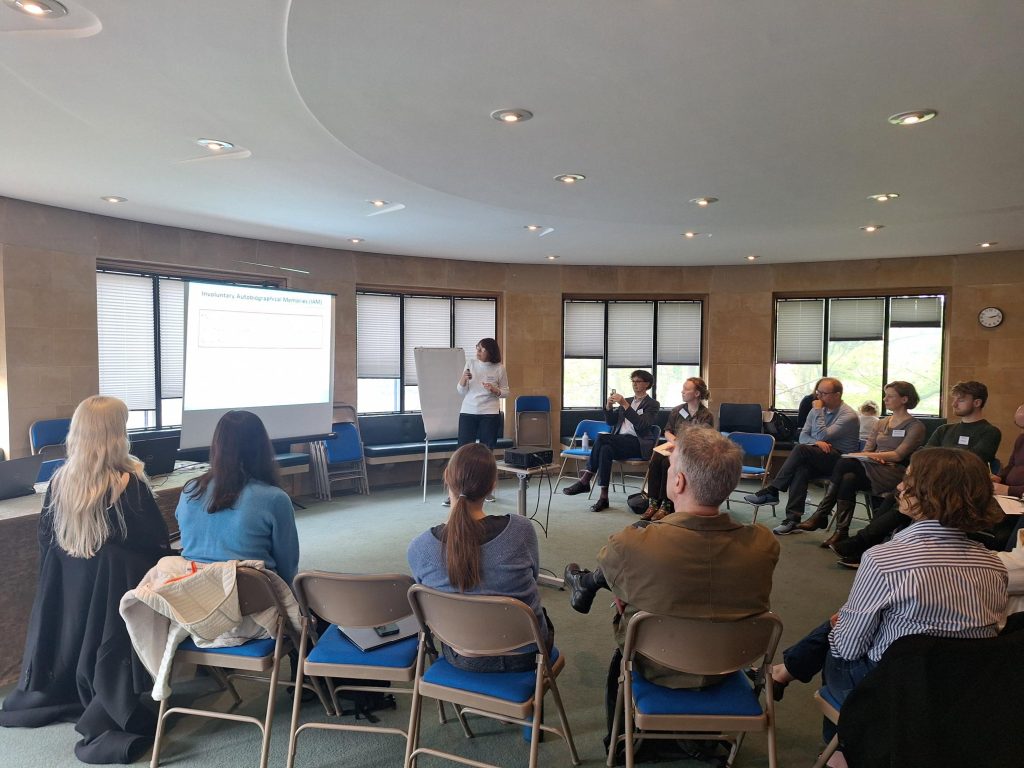
Professor Lia Kvavilashvili began her talk citing George Mandler, who argued that deliberate retrieval of information is the exception rather than the norm in everyday life. This perspective was ahead of its time, as sustained research interest in involuntary memory processes has only gained momentum more recently. Today, a wide range of research areas explore involuntary cognitive phenomena, including involuntary autobiographical memories, intrusive memories, involuntary semantic memories (often referred to as mind pops), earworms (the spontaneous recall of songs and melodies), mind wandering, and spontaneous task-unrelated thoughts.
Looking at the content of such thoughts, they may concern the past or future, but they can also be atemporal or completely fantastical. Some researchers even include auditory verbal hallucinations under the umbrella of involuntary cognitions.
Mind pops, or involuntary semantic memories, are less well known and studied compared to involuntary autobiographical memories. They consist of fragments of knowledge that enter the mind without intention, and could be single words, names, phrases, or lines from a poem.
?
Photograph © Kasia Mojescik.
One reason these processes were not studied more extensively earlier is the methodological difficulty – it is very challenging to capture them experimentally. Diary studies and experience sampling methods have therefore been central to this research, producing highly replicable findings. More recently, however, laboratory paradigms have been developed. For example, work by Shlagman and Kvavilashvili simulated conditions under which involuntary thoughts typically occur. Participants completed a monotonous task, involving viewing hundreds of slides with horizontal lines, responding only when vertical lines were displayed. Under these conditions, participants reported on average six to seven spontaneous memories every 20 minutes.
?
Photograph © Kasia Mojescik.
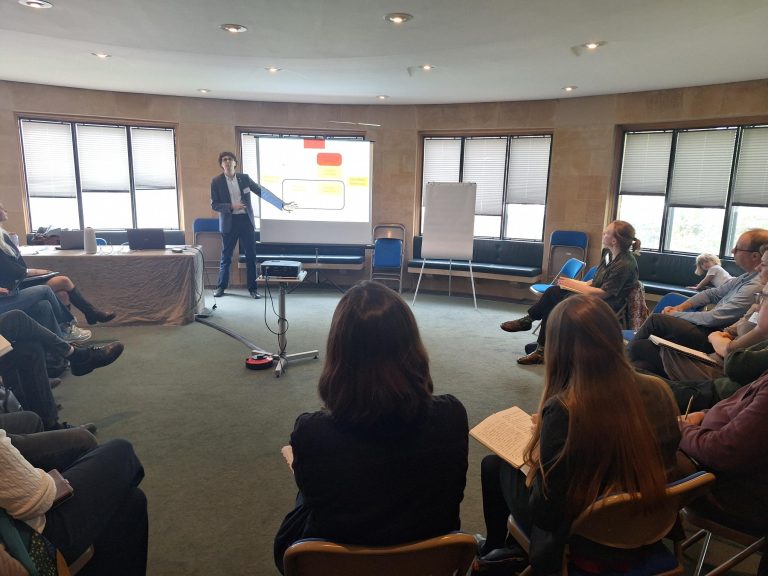
The second talk, by Dr. hab. Krystian Barzykowski, focused on the roles of intention, effort and monitoring processes in autobiographical memory recall. He proposed a threshold model of memory awareness, suggesting that becoming aware of a memory depends on the interaction between accessibility, intentionality, attentional factors, and metacognitive processes. He emphasised that so-called Proustian memories, as well as intrusive memories, are not representative of typical everyday autobiographical memories. In contrast, involuntary autobiographical memories are generally positive and distinct from clinically relevant intrusive memories.
His research suggests that memories should not be classified solely along a voluntary-involuntary dimension, but also in terms of the effort involved in retrieval. These two dimensions, retrieval intentionality and retrieval effort, influence memory characteristics independently. Another important dimension is the monitoring of the stream of consciousness, which likewise shapes phenomenological experience. For instance, memories retrieved in a more strategic manner tend to be less emotional, less personal, and less closely tied to one’s identity. In addition, Krystian discussed his recent work on déjà vu (Zareen et al., 2026), describing it as a form of spontaneous metacognition that reaches the threshold of conscious awareness.
The final talk, delivered by Dr Julia Dallaway, explored involuntary memories in the life-writing of Virginia Woolf. Julia began by situating Virginia Woolf’s autobiographical writing within a broader intellectual history of memory, beginning with Marcel Proust’s famous account of involuntary memory recall triggered by the taste of the madeleine. Proust’s description was ahead of its time, with cognitive psychology turning to such phenomena only some 80 years later.
Despite differences in their views of memory, Proust was influenced by a French philosopher Henri Bergson, particularly the idea that all memories are preserved, like books in a vast library, even those rarely accessed. Proust privileged involuntary memory retrieval over voluntary memory retrieval, regarding the latter as more susceptible to distortion and imaginative reconstruction.
?
Photograph © Kasia Mojescik
?
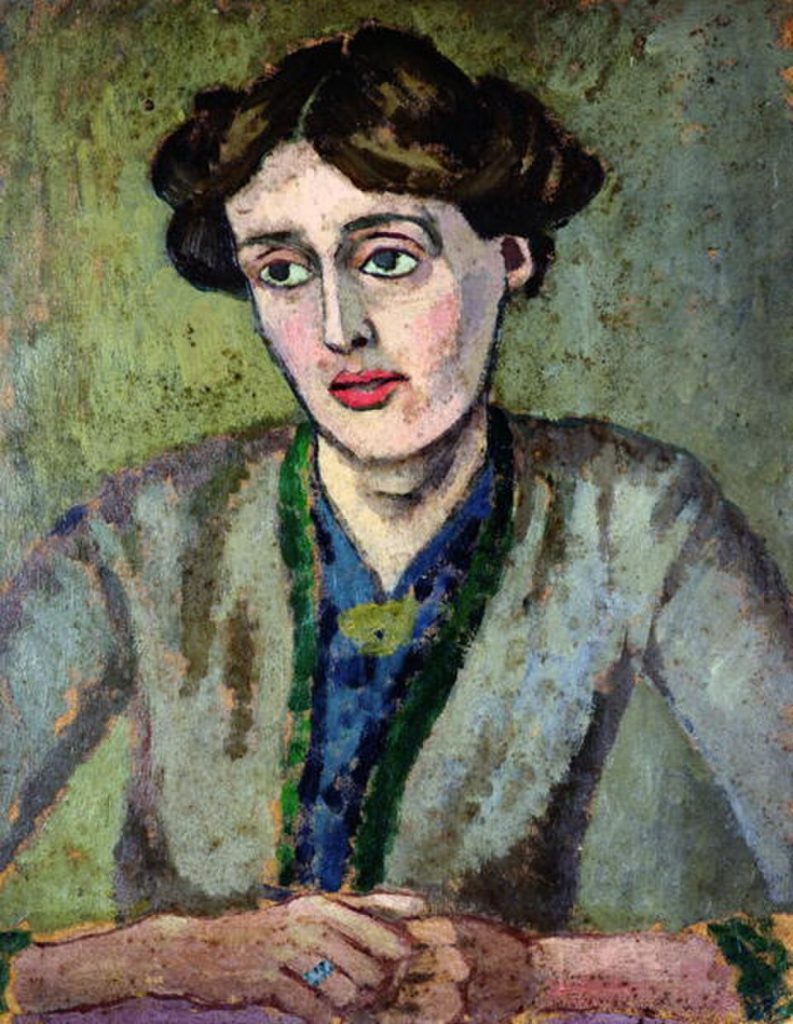
Portrait of Virginia Woolf, Roger Fry, circa 1917, Wikimedia Commons, Public Domain.
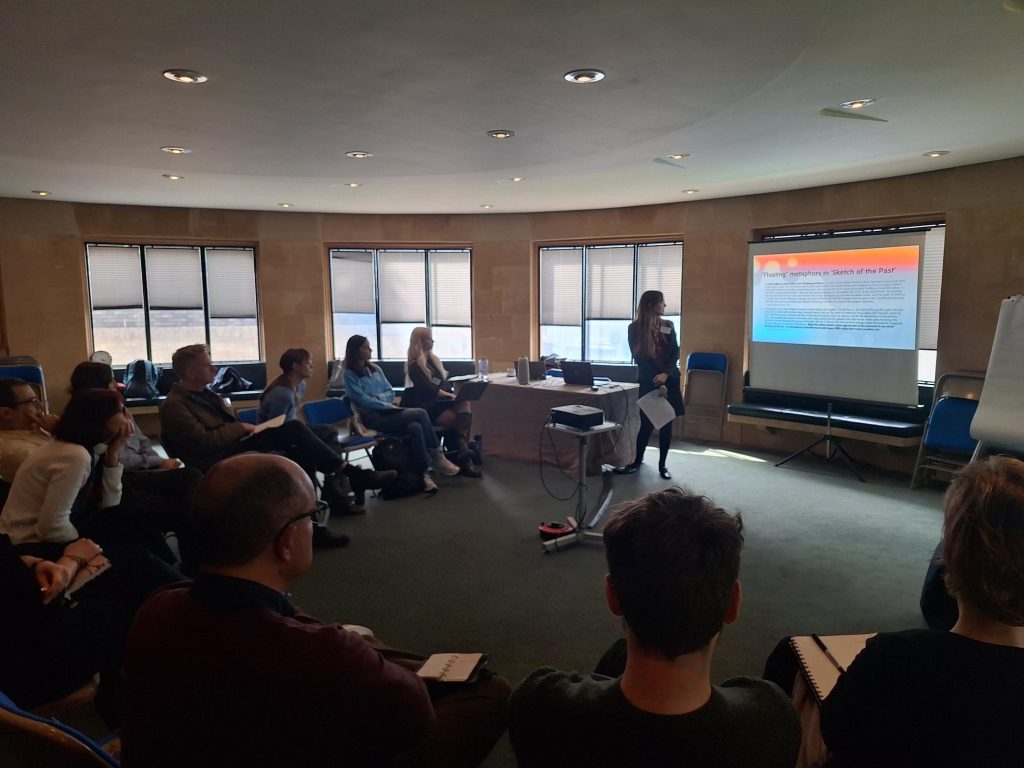
Proust’s work was a significant influence on the autobiographical writing of Virgina Woolf. In her memoir, “A Sketch of the Past”, Virgina Woolf recalls her childhood summers spent in St Ives in Cornwall as memories that “come to the top”, which echoes Proust’s metaphor of memories “rising to the surface”. Like Proust, she maintained that all memories are preserved, and that we could mentally “relive” our life from the start through them. However, in contrast to Proust, Woolf was more sceptical about the accuracy and veridicality of her involuntary memories.
Julia concluded by highlighting the importance of metaphor in shaping how we think about memory, demonstrating the importance of literary discussions for the progress of psychological memory research. William James described memory as a process of fishing for buried information, where associations serve as the necessary hooks, allowing us to “fish up” otherwise inaccessible information. In Woolf’s writing, the notion of “floating incidents” captures her understanding of memory as non-linear, associative, and sensory fragments which drift to awareness, yet reman anchored within a deeper network of associations. Read more about Julia’s analyses of Virginia Woolf’s writing here.