Welcome to the Cambridge Centre for Material Texts
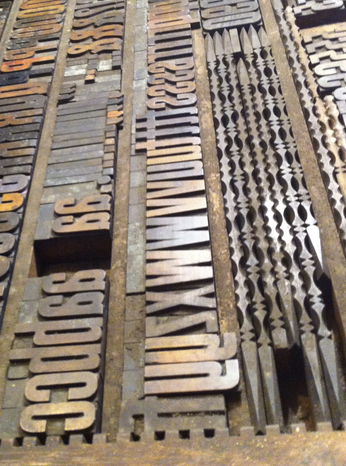
This is the website of the Cambridge Centre for Material Texts, an initiative aimed at pushing forward critical, theoretical, editorial and bibliographical work in an area which is currently galvanizing humanities scholarship. Addressing a huge range of textual phenomena and traversing disciplinary boundaries that are rarely breached by day-to-day teaching and research, the Centre will foster the development of new perspectives, practices and technologies, which will transform our understanding of the way that texts of many kinds have been embodied and circulated.
What is a material text?
A common assumption about texts – whether we are talking about plays, or works of philosophy, or letters – is that they are primarily mental events, which are merely reflected (often very inadequately) in their material forms. A writer may, in haste, put down the wrong word, a printer may misread their manuscript, or a censor may cut out sections of a book, and these acts work to corrupt the purity and integrity of the ‘real’ text. Such a view of the text accords primacy to writers and to their intentions, which readers should be able to access in their pristine state, in a meeting of minds. If you pick up a copy of a ‘classic’ in a bookstore, the chances are that it will have been edited with an eye to delivering ‘the text as the author intended it’, with nothing added and nothing taken away.
In reality, texts are always a good deal messier than this idea-centred account allows. The notion that any writer has a single, final intention is false, often demonstrably so; writers change their minds, revising their texts and responding to the unfolding form of their works in unforeseen, unpredictable ways. In addition, writing is a collaborative process, involving the writer in dealings with materials and institutions that help to give the text a presence in the world. The writer’s tools (pen-and-ink, typewriter, word-processor) may have a significant impact on the way that the text develops, as may the institutions and the media (manuscript, print, film, performance) by which it circulates. As the bibliographer D. F. McKenzie put it, ‘forms effect meanings’; every text is a negotiation between its creator(s) and a welter of worldly circumstances.
In recent years, academics across the humanities have been making a ‘material turn’ which has nowhere been so prominent as in our attitude to the words we read. The medium may not quite (as Marshall McLuhan had it) be the message, but its significance cannot be underestimated. The purpose of the Cambridge Centre for Material Texts is to foster the next generation of research into this fascinating field of inquiry.
Membership of the Centre is open to postgraduates and academics at the University of Cambridge, and to any scholars with an interest who are visiting Cambridge, for however long or short a time. If you are interested in joining the CMT, please send a brief description of your research interests and a photograph to Alison Knight <aek35@cam.ac.uk>. You can sign up for our news mailings by following the instructions at https://lists.cam.ac.uk/mailman/listinfo (the list name is ‘english-cmt’).
For the CMT Facebook page click here.![]()