Members
A B C D E F G H I J K L M N O P
Q R S T U V W X Y Z
CMT Director: Jason Scott-Warren
Advisory Committee: Mary Beard (Classics), Simon Franklin (Slavonic Studies), Robert Gordon (Italian), David McKitterick (Wren Library), Rosamond McKitterick (History), John Rink (Music), Jim Secord (History and Philosophy of Science), Nicholas Thomas (Anthropology), John Thompson (Sociology), David Trotter (English), Mark Turin (Anthropology), Alex Walsham (History).
Steering Committee: Ruth Abbott; Nicolas Bell; Jessica Berenbeim; Abigail Brundin; Sarah Cain; Stefano Castelvecchi; Orietta da Rold; Mina Gorji; Alison Knight; Hester Lees-Jeffries; Scott Mandelbrote; Suzanne Paul; Justine Provino; Mark Purcell; Paul Russell; Anne Toner; Tessa Webber; Georgina Wilson; Tessa Webber; Andrew Zurcher
If you are interested in joining the CMT, please send a brief description of your research interests and a photograph to Jason Scott-Warren <jes1003@cam.ac.uk>. You can sign up for our news mailings by following the instructions at https://lists.cam.ac.uk/mailman/listinfo (the list name is ‘english-cmt’).
Ruth Abbott (English)
|
Anne Alexander (Digital Humanities Network)Anne Alexander is Director of the Learning Programme at Cambridge Digital Humanities. Her research interests include ethics of big data, activist media in the Middle East and the political economy of the Internet. She is a member of the Data Ethics Group at the Alan Turing Institute and a member of the Steering Group of the Trust and Technology Strategic Research Initiative. |
Gavin Alexander (English)
|
Debby Banham (Anglo-Saxon, Norse and Celtic; History and Philosophy of Science)My chief research interests are in medicine, diet and food production in Anglo-Saxon England, with an on-going sideline in monastic sign language. I’m currently finishing a book (with Dr Ros Faith) on Anglo-Saxon farming. Other projects include an analysis of the materia medica of Old English medical texts. My work on BL Sloane 1621, an eleventh-century Latin medical text at least partly written at Bury St Edmunds, has recently been published in Tom Licence, ed., Bury St Edmunds and the Norman Conquest (Boydell, 2014). I teach palaeography in the ASNaC department, at Birkbeck College and on the London International Palaeography Summer School. |
Diane Barlee (Sociology)
|
Richard Beadle (English)
|
Nicholas Bell (Wren Library)
|
Jessica BerenbeimI teach literature and visual culture at English Faculty, and my research particularly involves the study of material texts—including manuscripts, printed books, charters and seals, and inscriptions. I’ve written a book called Art of Documentation: Documents and Visual Culture in Medieval England (2015), and I co-edited a volume of British Museum Research Publications called Seals and Status (no. 213, 2018). I also recently published a journal article, ‘Medieval Treaties and the Diplomatic Aesthetic’ (The Medieval Globe 4, 2018), which looks at the documents of diplomacy in their capacity as cross-cultural material texts. More broadly, my research concerns the aesthetics and materiality of writing, the role of visual culture in historical knowledge, archives and archival theory, and medieval cultural history. |
Katie Birkwood (Royal College of Physicians)
|
Patricia Pires Boulhosa (Anglo-Saxon, Norse and Celtic)
My current research involves the analysis of the layout of legal manuscripts, in order to throw light on the making of the manuscripts themselves, and the connections between layout and textual structure, as well as between the textual arrangement of the text and the legal content of the manuscript. |
Katherine Bowers (Slavonic Studies)
|
Amy Bowles (English)
|
Reanna Brooks (English)
|
Kerstin Bruchhaeuser (Fine Arts)
|
Abigail Brundin (Italian)
|
Claudine Brunon (Art History)
|
Sarah Bull (HPS)
|
Christopher Burlinson (English)
I am currently working on Richard Corbett (1582-1635), who interests me because of his involvement in many early seventeenth century manuscript networks (and the sheer number of copies of his texts in manuscript miscellanies and collections), but also because many of his poems take as their subjects the very institutions (e.g. university life) and structures (e.g. patronage) within which they were written and transmitted. |
Sarah Cain (English)
|
Melissa Calaresu (History)
In 2011 Melissa was one of the convenors of the CMT conference ‘Eating Words’ |
Stefano Castelvecchi (Music)
|
Mark Chinca (German)
I’m currently involved in two projects. One is a digital edition of the Kaiserchronik (http://digi.ub.uni-heidelberg.de/kcd/); the other is a book, provisionally entitled Remember Your Last End: Meditating on Death in Western Christianity, from Bonaventure to Luther, which examines the role of written texts in programming this important technique of the self. |
Jean Chothia (English)
I have edited a number of plays – 1930s redical texts for the old Nottingham Drama Texts series; 1890s/1900s emancipated women plays for OUP; Shaw’s Saint Joan for New Mermaids; James’s ‘The Outcry’ for the big CUP James project. I am interested in the shifts between the performed plays and the various published versions. |
Jo Craigwood (English)
|
Alex da Costa (English)
|
Richard Dance (Anglo-Saxon, Norse and Celtic)My main interests are in the language and style of Old and Middle English literary texts, and in etymology and language contact. Amongst other things I have written about ‘The Battle of Maldon’, Wulfstan and ‘Ancrene Wisse’, and I have recently finished a book about the words derived from Old Norse in Sir Gawain and the Green Knight. |
Orietta da Rold (English)
|
John Francis Davies (English, Oxford)
(Email: john.francis.davies@gmail.com). |
Sophie Defrance (History and Philosophy of Science)
|
Hildegard Diemberger (Archaeology and Anthropology)
|
Laura Dietz (English and Media, Anglia Ruskin)
|
Niall Dilucia (History)
|
Theodor Dunkelgrün (CRASSH, History)
|
Michael Edwards (History)I’m a Fellow and Senior College Lecturer in History at Jesus College, as well as being Fellow Librarian and Keeper of the Old Library. My research is on early modern intellectual and cultural history, with a particular focus on seventeenth-century philosophy, Descartes and the late Aristotelian tradition, in manuscript and in print. |
Tim Eggington (Librarian, Queen’s College Cambridge)
Currently College Librarian at Queens’, I am fascinated by the inter-relationships between intellectual history and book history, as well as in all aspects of the curation and promotion of early print and manuscript collections. |
Irène Fabry-Tehranchi (University Library)
I am keen on promoting Cambridge University Library French collections and Special collections across periods for teaching and research. |
Iain Fenlon (Music)Following the award of a Leverhulme grant in 200-2003, I have continued to work on printed sources of music before 1650 in Iberian libraries. This topic is essentially about the importation of printed books from Italy and Flanders during that period. I am currently preparing a catalogue of the material. |
Vittoria Feola (History and Philosopy of Science)
My books include the monograph Elias Ashmole and the Uses of Antiquity (Paris: Blanchard, 2013), and the collection of essays Antiquarianism and Science in Early Modern Urban Networks (Paris: Blanchard, 2014), which won a Urania Trust Book Grant. My articles about private libraries include: ‘Prince Eugene of Savoy’s Library. A preliminary assessment’, Rivista Storica Italiana vol. CXXVI No. III (2015) : 742-787; ‘Elias Ashmole’s collections and views about John Dee’, Studies in History and Philosophy of Science Part A 3 (2012): 530-538; and ‘The rediscovered library of Elias Ashmole’, Bibliotheca 1 (2005): 259-278. |
James Freeman (University Library)As of May 2016, I am the Medieval Manuscripts Specialist at Cambridge University Library. From January 2014, I was at the British Library, working first as an intern in the Ancient, Medieval and Early Modern Manuscripts Section, and then as the Research and Imaging Assistant on the Greek Manuscripts Digitisation Project. In April 2015, I took up the position of Curator of Incunabula and Sixteenth-Century Printed Books. My doctoral research (supervised by Tessa Webber; completed in 2013) concerned the manuscript dissemination and readership of Ranulph Higden’s Polychronicon and involved a survey of over a hundred surviving manuscripts at libraries and archives across the UK. With further funding from the Society of Antiquaries and AMARC, I am broadening my survey to include copies at libraries across Europe as well as copies of John Trevisa’s Middle English translation. I hope also to include those manuscripts at US libraries eventually, with a view to publishing my dissertation. I am particularly interested in the development of page layout and scholarly apparatus in historical manuscripts, the role of authors or emendators or scribes in designing such tools, and the way in which these additions mediated the text, facilitated the use of chronicles as historical reference works, and altered the way historical information was written, retrieved and repurposed. Manuscript indexes of all kinds are of especial interest in this regard (and not just in relation to historical texts), as are their transition into print and the technological challenges these and other paratextual guides presented to early printers. I have also conducted research on late medieval bilingual dictionaries, with reference to the Catholicon Anglicum. |
John Gardner (English, Anglia Ruskin)John Gardner is Principal Lecturer in English Literature at Anglia Ruskin University. He mainly teaches Eighteenth and Nineteenth Century Literature and Culture. His recent research has focussed on poetry and politics in the years following the battle of Waterloo, which he explores in his book Poetry and Popular Protest; Peterloo, Cato Street and the Queen Caroline Controversy (Palgrave, 2011). He is currently supervising PhDs on Fanny Burney and conservative poetry of the 1790s. His current research is on the transmission of radicalism through the 1820s. |
Judith Gardom (Criminology, Cambridge)
|
Heather Glen (English)Heather Glen is a Fellow Emerita of Murray Edwards College. She is currently completing two books, one provisionally entitled Before Wordsworth: Place, Language and People in Late Eighteenth-Century Cumbria, the other on Wordsworth’s poetry of the 1790s. |
Mark Goldie (History)My field is British Intellectual, Political, and Religious History 1650-1750. I’ve always been anxious that ‘Cambridge’ intellectual history should more securely contextualise its work in publishing history, the history of the book, and so forth. |
Robert Gordon (Italian)I teach in the Italian department of the Modern and Medieval Languages Faculty. My research interests lie in the literature, cinema and cultural and intellectual history of modern Italy. My current research project is about responses to the Holocaust in postwar Italy. |
Mina Gorji (English)
|
Fiona Green (English)
|
Deborah Hodder (Newnham College Library)
I am the Librarian at Newnham College, Cambridge. |
Joe Jarrett (English)
|
Peter Jones (King’s College Library)
My research interests centre on late medieval and early modern books, manuscript and printed, that contain scientific and medical information with a practical orientation. I am interested in patterns of circulation and appropriation of knowledge among practitioners and lay people. Currently I am working on the Generation to Reproduction project in HPS that has a strand concerned with ‘Representation and communication’, investigating how changing understandings of sex, development and evolution were produced, debated and used. |
Lauren Kassell (History and Philosophy of Science)
|
John Kerrigan (English)
|
Wai Kirkpatrick (King’s College Library)
|
Malak Khalil (English)
|
Alison Knight (English, CRASSH)
|
Sachiko Kusukawa (History and Philosophy of Science)
I have just finished a book on 16th century scientific illustrations (Picturing the Book of Nature, with Chicago, 2011), which includes quite a bit on technical and financial aspects of image production in printed book. My next project is on image-making in the early Royal Society (including how illustrations in the Philosophical Transactions were produced). I am also Co-Investigator for an AHRC research project on the function of astronomical images in the early modern period, which also looks as issues such as transmission, production and genre. |
Elisabeth Leedham-Green (Darwin College, Archivist)
I am ex-Deputy Keeper of the University Archives; currently the Ancient Archivist of Corpus Christi College, and Fellow and Archivist of Darwin. Some years ago I used to do some teaching for the palaeography and bibliography modules of the MPhil in Medieval and Renaissance Literature. My interests are in the circulation of texts, chiefly in, but by no means exclusively from, the British Isles from c. 1500 to 1680. |
Hester Lees-Jeffries (English)I am editing Shirley’s The Example, for the Complete Works of James Shirley (OUP); and vol. 4 of The Works of John Webster for CUP. I have also edited Thomas Watson’s manuscript translation of Bernard Palissy’s treatise ‘Of Waters and Fountains’ (Houghton MS Eng 707), for History of Gardens and Designed Landscapes. |
Rosalind Love (Anglo-Saxon, Norse and Celtic)
I have just finished a year’s research leave working on a Leverhulme-funded project jointly with people in the English Faculty in Oxford, focused on the early medieval manuscripts of Boethius’s Consolation of Philosophy, specifically with the aim of editing and analysing the glossing and marginal commentary that is in the nearly 80 surviving manuscripts up to 1100 (project website). |
Raphael Lyne (English)
|
Anne McLaughlin (Parker Library)
|
Scott Mandelbrote (History)
As the Perne Librarian at Peterhouse, I am responsible for the college’s collections of manuscripts (which represent perhaps the most significant survival of a pre-Reformation College library in Cambridge) and rare books (some of which made up perhaps the finest library in Cambridge, c. 1600). I organise an M.Phil. class on ‘The Book’ for the Early Modern M.Phil. in the History Faculty. My own research concentrates on early modern intellectual history. Among other topics, I have published on the history of scientific and medical libraries; the manuscripts of Isaac Newton; the archaeology of the library at Peterhouse; the survival and transmission of manuscripts of the Bible, and the publication, distribution, and readership of Bibles and other religious books. I have contributed to both the Cambridge History of Libraries in Great Britain and Ireland and the Cambridge History of the Book in Britain, and will be writing several chapters for the forthcoming History of Oxford University Press. I am general editor of the publications of the Oxford Bibliographical Society. |
Peter Mandler (History)
I am an historian of 19th and 20th-century Britain and more recently have been extending my interests across the Atlantic to the U.S. as well, especially as regards the twentieth century. My principal interests in CMT’s sphere lie: first, in the creation and dissemination in Britain and the U.S. of information about the wider world, as embodied in texts and also in institutions (like research institutes and area-studies centres); second, in the propagation of social-scientific ideas and vocabularies through popular media. I have a particular interest in the rise of the non-fiction bestselling book since the 1920s. |
Daniel Margócsy (HPS)
Dániel Margócsy is university lecturer at the Department of History and Philosophy of Science. His research focuses on the connected histories of science, trade, and business, the print culture of early modern Europe, and the cultures of collecting, natural history and anatomy. He is the author of Commercial Visions: Science, Trade, and Visual Culture in the Dutch Golden Age(Chicago: University of Chicago Press, 2014), and, with Mark Somos and Stephen N. Joffe, the The Fabrica of Andreas Vesalius: A Worldwide Descriptive Census, Ownership, and Annotations of the 1543 and 1555 Editions(Leiden: Brill, 2018). His articles have appeared in Annals of Science, the British Journal for the History of Science, the Journal of the History of Ideas, Nature, the Netherlands Yearbook of Art History, Social Studies of Science and The Lancet. |
David McKitterick (Wren Library, Trinity College)
David McKitterick is a Fellow of Trinity College, and emeritus Honorary Professor of Historical Bibliography in the University. He was Librarian of the College until his retirement. His many publications as author, editor or contributor include Print, Manuscript and the Search for Order, 1450-1830 and The Cambridge History of the Book in Britain. His most recent book (2018) is The Invention of Rare Books: Private Interest and Public Memory, 1600-1840. He is a Fellow of the British Academy, a gold medallist of the Bibliographical Society, and president of the Cambridge Bibliographical Society. |
Chiara Meccariello (Classics)
I am a Lecturer in Greek Literature at the Faculty of Classics and I teach Greek Papyrology, Palaeography and Textual Criticism. In my research, I work on Greek papyri as both material objects and carriers of texts, and I enjoy combining technical work on papyri with broader cultural-historical and literary approaches. Currently, my main research project is a study of ancient Greek pedagogy and its political and religious dimensions as reflected in the fragmentary remains of papyri, tablets and potsherds written by and for students and teachers in Graeco-Roman Egypt (ca. 300 BCE-700 CE). |
Vicky Mills (English)
|
Drew Milne (English)I am currently interested in the materiality of modernist and contemporary poetry, and in ways of thinking about the material status of modernist performance texts and their related ephemera. |
Simone Monti (MMLL)I am a PhD student in Italian at the University of Cambridge. My research focuses on Italian Renaissance women’s writing and practices of literary grieving. My PhD project aims to analyse how women writers created a new public language while mourning their husbands, crafting their voice between the previous literary tradition, longstanding gender stereotypes, and representations of female mourning. Besides exploring the relationship between literature and social, cultural and art history through the specific lens of material culture, I am studying how the book structure of Cinquecento editions influenced the ordering of texts in poetry collections and implied specific meanings for the women writers’ grieving processes and representations of their mourning. |
Nicolò Morelli (Italian)
|
John Morrill (History)
|
Subha Mukherji (English)
|
Lucille Munoz (Queen’s College Old Library)
During my master’s degree in book history and librarianship, I wrote a dissertation on Swift’s writing and the copies of his works at Lyon public library. My second dissertation focused on the 18th century Dutch writer, Justus Van Effen. As a rare books cataloguer, I am particularly interested in provenance. I co-created the Sion College Library Provenance, a digital gallery of provenance evidence found in the books from Sion College Library, now housed at Lambeth Palace Library, while I was working there: |
Mark Nicholls (St John’s College Library)
My teaching and research interests lie in Tudor and Stuart government and politics. My major publications are Investigating Gunpowder Plot (Manchester, 1991) and The History of the Modern British Isles, 1: The Two Kingdoms, 1529-1603 (Oxford, 1999) the first volume in the Blackwell History of Modern Britain series. I have also published several analyses of conspiracies and state trials, as well as studies of ‘succession politics’ at the death of Queen Elizabeth I, the political career of Sir Walter Raleigh, and University humour. I completed a new edition of George Percy’s ‘Trewe Relacyon’ (2005), one of the key texts chronicling the initial English settlement at Jamestown, in Virginia. Having edited the Journal of the Society for Army Historical Research for eight years, I retains an active interest in the history and traditions of the British Army. I was closely involved in the conferences and public events marking the 400th anniversary of the Gunpowder Plot conspiracy in 2005. Mark Nicholls and Penry Williams’s Sir Walter Raleigh: in life and legend was published by Continuum early in 2011. |
Máire Ní Mhaonaigh (Anglo-Saxon, Norse, and Celtic)I am interested in Text and Context and in the learned, cultural environment in which early medieval texts, primarily of Ireland, but also of Wales and Iceland, were produced. Editorial work forms part of my research and I have a particular interest in eleventh- and twelfth-century pseudo-historical narratives which shed light on Hiberno-Scandinavian relations. |
Richard Oosterhoff (CRASSH)
|
Stella Panayotova (Fitzwilliam Museum)Stella Panayotova is Keeper of Manuscripts and Printed Books at the Fitzwilliam Museum. She is Director of the Cambridge Illuminations and MINIARE projects, which integrate cross-disciplinary research in the arts, humanities and physical sciences on Medieval and Renaissance illuminated manuscripts. |
Ian Patterson (English)
As part of the work I do on literature and politics in twentieth-century Britain and America, I have a longstanding interest in the publication history of poetry and fiction in the early and mid- twentieth century, particularly the more fugitive or short-lived or eccentric periodicals and ephemera. This is shaped by two impulses, one essentially bibliographical, the other aesthetic and epistemological, which come together in a focus on the material forms of publication and exchange. Small press publication, little magazines, politically-inspired periodicals with a cultural bent, pamphlets, and quotidian cultural and political commentary are my main interest in this field, along with the networks of circulation that sustain them; this is supplemented by a concern with typography, book design, private presses (especially in the period between 1918 and 1933) and patterns of patronage, translation and literary agency. Although some of this takes the form of literary or cultural history, I am also interested in the ways in which the experience of the material form in which the text is read affects and shapes the reader’s response to it. |
Suzanne Paul (University Library)
I am the Keeper of Rare Books and Early Manuscripts in the UL, responsible for looking after thousands of medieval manuscripts and over a million rare books. My interests are correspondingly and necessarily diverse but my research background is primarily in medieval manuscript studies. My particular field is medieval sermons which survive in material form but also offer glimpses of orality and performance; I am currently editing a late medieval English sermon text. I also have a strong interest in digitisation and its impact on all forms of engagement with manuscripts. |
José María Pérez Fernández (Literature)
|
Kate Peters (History)
I am a fellow in early modern history at Murray Edwards College, Cambridge. My doctoral research was on the print culture of the early Quakers during the English revolution (c. 1650-1660). Since then I have turned to the history of record keeping in the English civil wars and revolution, a time of great change in terms of who had the power and authority to keep and control records, and when great numbers of records were destroyed or seized as land and property were taken by force. I am interested in the materiality of these records both in terms of how the physical control of their custody bestowed political and economic power; and how, in the upheavals of revolution, the authority and truth of the records and their custodians were profoundly challenged. |
Adrian Poole (English)
|
Claire Preston (English)
|
Justine Provino (English)
My research is based on a case study of the 1992 American artist’s book Agrippa (A book of the Dead), for which the publisher’s archives has been deposited at the Bodleian Libraries, along with a deluxe and a small copy of the book. Around this case study revolves a conceptual investigation of the meaning of analog and digital ephemera collections in libraries, and especially university libraries such as those at Cambridge and Oxford. My PhD research is funded by an AHRC Collaborative Doctoral Award and a Cambridge Trust Scholarship, and is jointly supervised by Dr Jason Scott-Warren (Faculty of English, University of Cambridge), and by Dr Christopher Fletcher (Bodleian Libraries, University of Oxford). Prior to my current graduate studies, I was an Assistant Conservator in the Conservation and Collection Care Department at the Bodleian Libraries (2018-2019), and a Pine Tree Foundation Postgraduate Fellow in Book Conservation at the Morgan Library & Museum (2015-2017). I hold both a Master’s Degree in Medieval History (Paris-Sorbonne University-Paris IV, 2009) and a Master’s Degree in Conservation of Cultural Heritage, specializing in Book and Paper Conservation (Pantheon-Sorbonne University-Paris I, 2015). During my final year of conservation studies, I was a graduate intern at the Library of Congress, the Harry Ransom Humanities Research Center at the University of Texas, and the University of British Columbia. |
Mark Purcell (University Library)I am Deputy Director, Research Collections at the University Library and a Bye Fellow of Pembroke. At the UL I have overall responsibility for the heritage collections of one of the world’s great research libraries, as well as for public and reader services in the main building in West Road, and for exhibitions and public programmes. Before coming to Cambridge, I was for sixteen years the Libraries Curator of the National Trust, with oversight of over 170 historic libraries in England, Wales, and Northern Ireland. I began my career in libraries in Oxford, where I worked at the Bodleian and at Christ Church. My research has concentrated on the history of private libraries in Britain and Ireland, and particularly on libraries in country houses – their assembly, use, dispersal, and architectural setting. Other interests include the history of the book in Ireland, illustrated books, the history of collecting, and the book as material culture (country houses books tend to be their undisturbed original condition, and I have seen a lot of them). Publications include numerous articles on individual libraries and collectors, a book on libraries in Ulster, as well as my largest work to date, The Country House Library, published by Yale in 2017. I am a former Vice-President of the Society of Antiquaries, a Fellow of the Royal Historical Society, and a former member of the Council of the Bibliographical Society. |
James Raven (History)
|
Samantha Rayner (Publishing, UCL)
|
Emerson Richards-Hoppe (Pembroke College Library)My research interests include production, readership, and reception of medieval Insular and French manuscripts; the post-medieval development of library collections; and, the cultural exchange between England, France, and the Celtic nations. I have extensive training and practice with medieval paleography and codicology. My methodological approach is, succinctly put, “the book as an archeological site”. |
John Rink (Music)
|
Dunstan Roberts (English)
I work on the social and intellectual history of books during the early modern period. My aim is to broaden our knowledge of what books people owned, what books they read, and how they read them. My current projects include a reconstruction of the library of the Edward, first Lord Herbert of Cherbury (1582-1648) and a study of the books and reading practices of the puritan iconoclast William Dowsing (1596-1668). I also have a longstanding interest in the libraries of great houses. This has been pursued in part through a series of collaborations with Abigail Brundin, in which we have sought to convey the significance of such collections to a general audience. We have studied Belton House (Lincolnshire) and we are currently working on Audley End (Essex). You can read Dunstan’s co-authored article on ‘Book-Buying and the Grand-Tour’ (co-authored with Abigail Brundin) here |
Johannah Rodgers
|
Edwin Rose (History and Philosophy of Science)
My research explores the intersection between the practice of natural history and the history of the book during the long eighteenth century. Of particular interest is the use of books and how these related to natural history collecting, matters of scientific publishing in addition to the construction, distribution and assimilation of books into global networks. My current doctoral research examines British naturalists’ use, construction and distribution of books in the period between 1760 and 1820, taking Joseph Banks, Thomas Pennant and Gilbert White as the main examples. For more information and recent publications, please consult my department web page: https://www.people.hps.cam.ac.uk/index/graduate-students/rose |
Paul Russell (Anglo-Saxon, Norse and Celtic)
|
Yvonne Salmon (Land Economy)
Yvonne Salmon lectures for the Department of Land Economy where she directs courses on law and behavioural economics. She is also an affiliated lecturer with the Faculty of Law, a member of the Faculty of English, an associate of the Department of Art History and an affiliate member of the Centre for Film and Screen, University of Cambridge. Yvonne Salmon directs the Alchemical Landscape Project. Yvonne maintains an interdisciplinary research profile that extends across these fields. Relevant key themes have included: recording, memoir, surveillance, evidence, gossip, gender, vulnerability, mischief, identity, social media, unreliable narrators and attitudes towards interdisciplinarity. This work frequently focuses on archives, material texts and ephemera as in the case of ‘Headlands’, a speculative exhibition Yvonne mounted for the Centre for Material Texts in Summer 2016. Headlands developed into a live expanded cinema performance presented at the Festival of Ideas and will be released as a spoken word album in 2018. Recent publications have appeared with Getty, Cambridge University Press, Intersentia, and the BFI (amongst others); an interdisciplinary study of sixties queer writing, identity, space and law is in press with Bloomsbury. She is currently writing on law, literature and the culture of the 1960s. Her original film work explores the relationship between the text and the visual, and a co-authored book of prose and images from her psychogeographical films will be published in late 2017. She is the director of the Alchemical Landscape project, currently hosted by CRASSH, and she will be giving a TEDx talk on the social value of mischief in October 2017. |
Jason Scott-Warren (English)
I have published three books: Sir John Harington and the Book as Gift (2001), Early Modern English Literature (2005), and Shakespeare’s First Reader: The Paper Trails of Richard Stonley (2019). Recent-ish articles have focused on book-graffiti, practices of commonplacing, the stringing and binding of books and the physicality of language in Elizabethan prose. I am currently working on a new book (or two) exploring Alfred Gell’s notion of the exuvial; I’m editing Strange Newes for the Oxford Works of Thomas Nashe; and I’m writing in collaboration with Claire M. L. Bourne about John Milton’s copy of the Shakespeare First Folio. |
Sophie Seita (English)
|
Richard Serjeantson (History)
My current research, much of which is undertaken in collaboration with Dr Angus Vine, focuses on the writings of Francis Bacon, especially those from between 1603 and 1613. As such I am interested in questions of bibliography, codicology, palaeography, and textual transmission, especially as they pertain to the many surviving manuscripts (and rather fewer printed books) of his works from this period. Publications arising from this research of relevance to the Centre include: Richard Serjeantson and Thomas Woolford, ‘The Scribal Publication of a Printed Book: Francis Bacon’s Certaine considerations touching the Church of England (1604)’, The Library, 7th ser., 10 (2009), 119–56; and Richard Serjeantson, ‘The Division of a Paper Kingdom: The tragic afterlives of Francis Bacon’s manuscripts’, in Archival Afterlives: Life, Death, and Knowledge-Making in Early Modern British Scientific and Medical Archives, ed. by Vera Keller, Anna Marie Roos, and Elizabeth Yale (Leiden: Brill, 2018), pp. 28–71. |
Nicholas Smith (University Library / Cambridge Bibliographical Society) |
Elsa Strietman (Dutch)
My research is in the early modern literature and history of the Low Countries, with a special interest in the prolific drama culture of the late-fifteenth and the sixteenth-century and the social and religious aspects of the texts and the activities of the amateur drama and poetry guilds, the Chambers of Rhetoric. I am happy to help with the translation and reading of Dutch documents. |
Catherine Sutherland (Magdalene College)
I am a special collections librarian at Magdalene College and founder of the Special Collections Group, an informal discussion group for librarians working in Cambridge Colleges with responsibility for rare books and manuscripts. I wrote my Master’s degree dissertation on the development of libraries in Cambridge from 1450 to 1550. My current research focuses on the collecting habits of Samuel Pepys and his ‘collecting friendship’ with John Evelyn. I have given talks at the following conferences : ‘Collecting Texts and Manuscripts, 1660-1860’ at Plymouth University, and ‘The Ferrars of Little Gidding’ at Magdalene College Cambridge. I write for and maintain the special collections side of Magdalene College Libraries’ blog: www.magdlibs.wordpress.com. Recent Publication: ‘Samuel Pepys and John Evelyn: A “Collecting Friendship” as Told through a Re-evaluation of Manuscript PL 2237 and Print Album PL 2062 in the Pepys Library, Magdalene College Cambridge’ in A. Bautz and J. Gregory, eds, Libraries, Books, and Collectors of Texts, 1600-1900 (Abingdon: Routledge, 2018). |
Andrew Taylor (English)
One part of my current work on English humanists explores the competition for authority between manuscripts and printed editions of ancient texts, including the rhetoric of editors and translators (often combined). It also involves the emergence of scholarly printing in England. I contribute to the MML History of the Book, 1450-1650 MPhil module. |
Corin Throsby (English)
|
Anne Toner (English)I am interested in the history of punctuation. In particular, I have written about the evolution of marks of suspension and omission in English literary texts and have recently edited a special issue of Visible Language (2011) which brings together essays that examine punctuation from different disciplinary viewpoints and as used within different media. I have also co-edited, with Joe Bray and Miriam Handley, a collection of essays on visual and material elements of literary works: Ma(r)king the Text: The Presentation of Meaning on the Literary Page (Ashgate, 2000). For details of Anne’s new book on the history of ellipsis, see our ‘Gallery’ page here. |
Felix Waldmann (History)
|
Andrew Webber (German)My research ranges widely over modern German-language visual and textual culture, with comparative and interdisciplinary interests. Since 2014 I have been Principal Investigator for an AHRC-funded project producing digital critical editions of works by Arthur Schnitzler (https://www.arthur-schnitzler.org/). The editions are to be hosted as an open access resource by Cambridge University Library, which holds a substantial part of Schnitzler’s literary estate. |
Tessa Webber (History)
My own current research is on the books and texts used for ‘public’ reading within religious communities from c.1000-c.1250: i.e. the reading in the refectory, at collation, during the daily meeting in chapter, and the readings of the night office. |
Jill Whitelock (University Library)
|
Hazel Wilkinson (English)
|
Georgina Wilson (English)
|
Edward Wilson-Lee (English)
I have worked on various aspects of early print culture, from how texts circulated within early modern transnational networks to how print affects the way we read, organize knowledge, and think. In recent years I have published books on Translation and the Book Trade in Early Modern Book Trade (2015, co-edited with José María Pérez Fernández), an account of Shakespeare’s central role in the culture of eastern Africa (Shakespeare in Swahililand, 2016), and a biography of Christopher Columbus’ son Hernando, who built the first great library focused on printed works (The Catalogue of Shipwrecked Books, 2018). I am co-authoring a detailed study of Hernando’s library (forthcoming from Yale in 2019), and starting a new project on the archive and globalization. |
Laura Wright (English)Laura Wright is a Senior Lecturer in the Faculty of English and a Fellow of Lucy Cavendish College. Her books include Sources of London English (1996) and (as editor) The Development of Standard English 1300-1800 (2000). |
Andrew Zurcher (English)
My research to date has emphasised early modern legal history, Elizabethan colonial and military activity in Ireland, textual studies (including palaeography and manuscript studies), the sixteenth-century reception of Academic and Pyrrhonist epistemology, early modern secretarial practice, and the theory and practice of allegory in the sixteenth century. |
 I am currently (with others) working on a Handlist of Middle English Prose volume to be devoted to the manuscripts at St John’s and Magdalene Colleges, Cambridge, and contributing to a new descriptive catalogue of the medieval and early modern manuscripts at St John’s.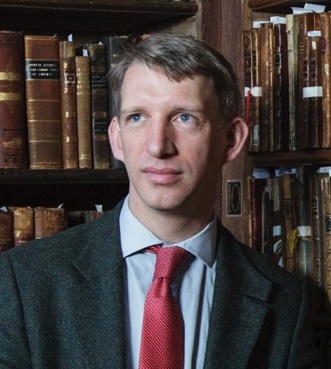
 I’m the Rare Books and Special Collections Librarian at the Royal College of Physicians, London. My research interests lie in the history of libraries and library usage, including the collections of John Dee (1527-1609), Robert Cotton (1571-1631) and Henry Pierrepont, first Marquis of Dorchester (1606-1680). I co-compile the bibliography of recent publications in the fields of library and information history for the journal Library & Information History.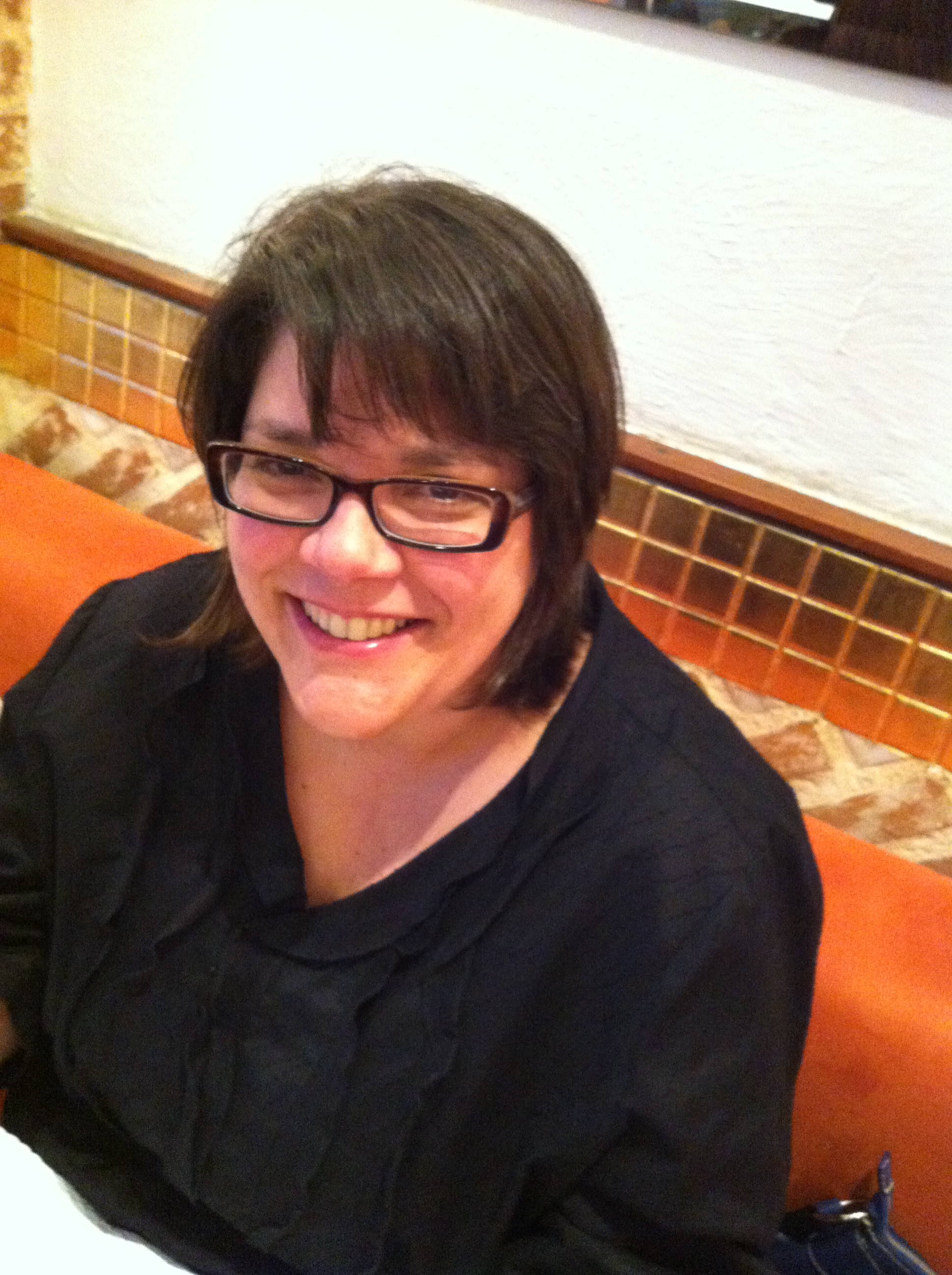
 My recent work has engaged with the reading practices of ‘ordinary’ readers at home with their devotional books in Renaissance Italy. I am interested in who read, how, when and where, and how the non-literate engaged with texts. I am also interested in devotional print production for the non-elite over the arc of the sixteenth century.
 I am a Wellcome Trust Research Fellow in the Department of History and Philosophy of Science, working on my project “Medical Publishers, Obscenity Law, and the Business of Sexual Knowledge in Victorian Britain”. While charting the changing structures of medical publishing in Victorian Britain, I am investigating how different kinds of publishers selected, edited, marketed, and distributed writing on sexual health during a period that witnessed rising anxiety about the social effects of sexually explicit writing. In addition to my work on this project, I have broader interests in Victorian media and print culture; the history of bibliography, libraries, and collections; the history of pornography; and the intersections between digital humanities and book history. At HPS, I co-teach the graduate seminar Science in Print II: Book Production in the 19th and early 20th Centuries.
 I have worked on Edmund Spenser (and have edited, with Andrew Zurcher, a collection of his
 Most of my work as a musicologist has focused on eighteenth- and nineteenth-century opera. I have been long involved with philology, as I published critical editions within the series dedicated to the works of Rossini and Verdi, collaborated in other ways to the editorial work of those series, and published brief contributions to the theory of opera editing. I hope to return soon to the study of the compositional sketches of Anton Webern (1883-1945).
 I work on literature and diplomacy in early modern England. This has led me to consider (among other things) diplomatic agency in the international circulation of books, manuscripts, and literary news.

 My principal bibliographic interests concern the collecting and editing of renaissance music (print and manuscript) in 18th-century Europe and the impact this had on English musical style and culture of the period. Following from this I am currently nearing completion of a book on the influential 18th-century London-based organization known as the Academy of Ancient Music.
 I am Gerda Henkel Fellow and Senior Research Associate, Oxford University. I earned my PhD in History from Cambridge University (2005). I am interested in the history of early-modern knowledge and erudition; the history of private libraries; the Republic of Letters; the history of collections; the relationship between the histories of science and the humanities; and the modes of early-modern intellectual communication.

 My work considers the material evidence for what we know about the past, mostly through studies of magic and medicine in early modern England. I am director of the
  My interest in textual scholarship began in the 1980s when there was a ferment of new thinking about the ‘instability’ of Shakespeare’s texts, especially, at that point, Quarto and Folio King Lear. This led me to work on editorial theory, and to explore the material conditions of textual production and circulation. My current research spans the early modern and the contemporary periods, attentive at both ends to way layout, format and the economics of print and the internet impact on the experience of reading.
 My work focuses on the History of the Bible in English. My PhD (Cambridge) investigates early modern approaches to the textuality of scripture; I emphasise literary interactions with the Book of Job, which presents numerous textual challenges. I am currently a Research Associate at CRASSH, where I am part of a research team that is investigating the Bible and antiquity in the nineteenth century. My work examines cultural emphases on “the English Bible” in this period.

 I am currently Project Associate (Rare Books Cataloguer) at Queens’ College Cambridge, a post funded by the Heritage Lottery Fund which is supporting the College’s cataloguing and outreach project entitled: ‘Renaissance Queens’: Discovering Cambridge’s unique Tudor past in the Old Library of Queens’ College Cambridge’. I catalogue the Library’s sixteenth-century books and assist with the project’s outreach components.
 I work on the history of late medieval and early modern science, especially the links between university or humanist learning and artisanal and popular knowledge. Interests that relate to CMT include the practices of collaborative authorship in the Renaissance and the visual cultures of early printed textbooks. A related interest is the
 I am one of four general editors for a complete new edition of the novels and tales of Henry James, to be published by Cambridge University Press; I am myself editing The Princess Casamassima (the autograph ms. for which has, unusually for James, survived). As one would expect, the work of the edition involves extensive engagement with publishing practices in the late nineteenth and early twentieth centuries, on both sides of the Atlantic. I am also a member of the editorial board for a complete new edition of the writings of Evelyn Waugh, to be published by Oxford University Press.
 I’m the general editor of the complete works of Sir Thomas Browne (8 vols, forthcoming from OUP 2016-2018), an AHRC-funded project based at Queen Mary London, where I’m Professor of Renaissance Literature. Within that edition, I am co-editing Urne-Buriall, The Garden of Cyrus, Christian Morals, and A Letter to a Friend (



 I have just completed an AHRC-funded project on

 I am a Junior Research Fellow in English at Queens’, working on my first book, tentatively called, Provisional Avant-Gardes: Little Magazine Communities from Letterpress to Digital—a diachronic study of provisional avant-garde communities in and around the medium of the little magazine, which rethinks received views of avant-garde ‘movements’ and their respective historical, social, and aesthetic boundaries, and theorises a dynamic and contemporary model of avant-gardism. My other research interests include 20th and 21st-century print culture, avant-garde poetry and poetics, new media, archives, and experiments with autobiography (from the 18th cent. until today).

 I work on sixteenth- and seventeenth-century English literature, with a particular focus on the works of Edmund Spenser, Philip Sidney, and William Shakespeare. With Raphael Lyne and Gavin Alexander, I wrote English Handwriting 1500-1700: An Online Course, now part of an AHRC-funded project, based at the Cambridge Faculty of English, called