
Prof Jacqueline Tasioulas, Clare
jt257@cam.ac.uk
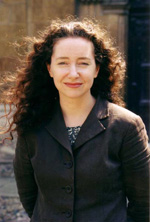
Biographical Information
I am Professor of Medieval English and Scots, and a Fellow of Clare College. I grew up in Glasgow and was an undergraduate at the University of Glasgow, where I did my MA. I studied for my doctorate at the University of Oxford, and was a Snell Exhibitioner at Balliol College. I then spent three further years at Oxford as a Junior Fellow at New College, before becoming a Lecturer at the University of Stirling. I have been at Cambridge since 1999, first as a College Teaching Officer and then as a University Teaching Officer.
Research Interests
My current research is on Chaucer, the literature of the early Tudor period, and in the field of the medical humanities.
Two of my most recent articles focus on Robert Henryson, both as an author exploiting a Chaucerian legacy, and also as a major fifteenth-century writer. The Henryson research leads on from my previous edition of the work of Henryson, Dunbar, and Douglas: The Makars. In addition, the interaction between literature, science, and theology is one of my prevailing research interests. I have published previously on such topics as the foetal existence of Christ and on the apocryphal lives of a post-lapsarian Adam and Eve, examining the ways in which authors negotiate scientific knowledge and theological demands. This work continues in my current research into the phenomenon of angelic voices in medieval literature. I am also completeing a book on Geoffrey Chaucer.
Areas of Graduate Supervision
I have supervised students on Chaucer, various aspects of medieval science and literature, and medieval Scots.
Selected Publications
‘Medieval Dreams’ for A Handbook to Medieval Literature and Science (London, Palgrave Macmillan) ed. Corinne Saunders and Michael J. Huxtable. Forthcoming 2025.
‘The Makars’ in The Cambridge History of Scottish Literature ed. Ian Duncan (Cambridge University Press). Forthcoming 2025.
'Poetry and the Bible' for the Oxford History of Poetry in English Vol 2. 1150-1408 (Oxford University Press, 2023) ed. Helen Cooper and Robert R. Edwards.
Chaucer: The Basics (London; Routledge, 2020).
'The Angel Gabriel’s Words and the Problems of Angelic Locution’ in Visions and Voice-Hearing in Medieval and Early Modern Contexts ed. Hilary Powell and Corinne Saunders (London; Palgrave Macmillan, 2021), pp. 45-60.
‘Double Sorrow: the Complexity of Complaint in Chaucer’s Anelida and Arcite, and Henryson’s Testament of Cresseid’, Critical Survey 30.2 (2018), pp.1-14. Reprinted in C.W.R.D. Moseley ed. Engaging with Chaucer: Practice, Authority, Reading (Berghahn;, New York, 2021), pp.233-47.
‘The Idea of Feminine Beauty in Troilus and Criseyde, or Criseyde’s Eyebrow’, in Traditions and Innovations in the Study of Medieval English Literature: the Influence of Derek Brewer, ed. Charlotte Brewer and Barry Windeatt (Cambridge; D.S.Brewer, 2013), pp.111-27.
‘ “Dying of Imagination” in the First Fragment of the Canterbury Tales’ Medium Aevum 82 (2013), pp.212-35.
‘Sex, Medicine and Disease’ in A Cultural History of Sexuality in the Middle Ages ed. Ruth Evans, Vol.II of The Cultural History of Sexuality. (Oxford; Berg, 2011), pp.180-99.
"'Heaven and Earth in Little Space' The Foetal Existence of Christ in Medieval Literature and Thought", Medium Aevum 76.1, 2007, 24-48
"Science", Chaucer: An Oxford Guide, ed. Steve Ellis, Oxford University Press, 2005, 174-89
J.A. Tasioulas and Brian Murdoch eds., The Apocryphal Lives of Adam and Eve, (Exeter; University of Exeter Press, 2002)
The Makars: The Poetry of Henryson, Dunbar,and Douglas, (Edinburgh; Canongate, 1999)
The Wife of Bath’s Prologue and Tale (London; Longman, 1998).
The Franklin’s Prologue and Tale (London; Longman, 2000).