The Novel in the Age of Amazon

Events;

MARK McGURL (Stanford University) will be talking about EVERYTHING AND LESS:THE NOVEL IN THE AGE OF AMAZON

THURSDAY 4th JUNE at 5.30pm

ROOM G06/7, ENGLISH FACULTY

Mark McGurl is the author of, among other works, a much discussed and lauded recent book, The Program Era: Postwar Fiction and the Rise of Creative Writing (2009)

‘Magisterial’ (Fredric Jameson)

‘It is a cliché to say that a book so changes your view of a particular historical period or problem that you never see it the same old way again. But this is the kind of book that warrants such praise.’ (Jim English)

Osama’s Library

Blog;

The US authorities have just released details of Osama bin Laden’s library, the books and documents allegedly removed from his compound in Abbottabad, Pakistan, when it was raided by special forces in May 2011. Newspaper columnists have been busily analysing the list for what it might reveal about this mysterious figure–including his devotion to key theorists of jihad, his love of ‘conspiracy theories’, and his peculiar interest in France (reflected in titles like ‘France on Radioactive Waste Management 2008’–we are not talking Toujours Provence).

Like most booklists, this one is frustratingly thin on detail, a bare list of titles and authors, if we are lucky. The research skills of the intelligence experts who compiled it seem rather limited (‘appears to be an academic journal article, origin unclear’ is their comment on one item). The material form of the books is not specified; an article in The Guardian online suggests that many of them were probably PDFs rather than physical books. The same article points out that ‘US authorities have not given any information about where the books were found in the Abbottabad residence – so quite what lay on Bin Laden’s bedside table, in the room in which he was shot and killed, remains unknown – nor have they divulged any details of any marginal notes the onetime civil engineering student might have made’.

That’s true, and a shame, although the list does provide a section of ‘Documents Probably Used by Other Compound Residents’ which includes a handbook of Arabic calligraphy, the Grappler’s Guide to Sports Nutrition and some pages from the 2008 Guinness Book of World Records Children’s Edition. We are not to imagine the terrorist mastermind worrying about the relationship between his weight and his muscle mass while he wields a reed pen to copy down details of ‘the farthest tightrope walk in high heels’, or ‘the most toothpicks ever placed in a beard’.

What bin Laden was definitely up to, according to the Daily Mail online, was pornography–although the American authorities have nobly declined to release any information about this ‘due to the nature of the content’. As the Mail comments, despite the lack of information, ‘the detail painted the al Qaeda leader as a hypocrite, since watching porn clashed with his fundamentalist image’. Yes indeed, that hits the nail on the head. But given that the journalist Seymour Hersh has just revealed the extent to which the American regime may have lied to the public about the raid on Abbottabad and the assassination of bin Laden, why should we believe anything it tells us about what was found in the compound?
windswept relics

Blog;

Thomas Meaney on the diaries of J.M. Coetzee (now held at the Harry Ransom Humanities Research Center at the University of Texas at Austin) in the latest LRB:

‘The entries appear in meticulous small script, very rarely crossed out, all neatly dated. They are not the observations of a writer who trusts his instincts, still less his reason. They are more like the carefully sifted, windswept relics of a dried-up saint.’

mini-exhibition

Blog;

The CMT has taken over the two display cases in the entrance hall of the University Library–if you’re passing by, do drop in and take a look…

CMT Material-Textual Breakfast

Events;

Wednesday 13 May, 9-10.30 am
Social Space, English Faculty

Please join us in the Social Space on the ground floor of the English Faculty for the first ever CMT material-textual-breakfast. This is an opportunity to meet people, to discuss current projects and to firm up plans for the future. Grab a coffee from the ARB (or wherever) and come over. Freshly baked cakes will be provided!

Male Devotional Practices

Calls for Papers, News;

Transforming Male Devotional Practices from the Medieval to the Early Modern

University of Huddersfield, 16-17 September 2015

This conference is co-hosted with the Universities of Reading and Liverpool Hope. It aims to explore the social, economic and spatial factors underpinning the changing way ordinary men demonstrated their commitment to God and the church(es) in a period of significant turmoil. Papers that address English male devotional experience from historical, literary, gender studies and material culture perspectives are welcomed. Suggested themes include:

Religion and Society: Domestic piety and lay/household Catholicism.

Material Culture and ritual objects.

The economy of piety: indulgences, relics and paying for piety.

Personal and public piety: Continuity and change over the medieval and early modern periods.

Devotional reading, writing and performance.

Geography, place and space in Catholic piety.

Please send proposals to: devotionalpracticeconference@gmail.com by 22nd June 2015.

Seminars in the History of Material Texts–Easter 2015

Seminar Series;

HMTlogo2_highres

Seminars in the History of Material Texts

Thursdays at 5.30 pm, SR-24 (second floor), Faculty of English, 9 West Rd

30 April–Jaclyn Rajsic (University of Cambridge)

‘The Rolling Text: using space in royal genealogies, c. 1300-c. 1450’.

14 May — Stacey McDowell (University of Cambridge)

‘Keats’s Reading’

All welcome.

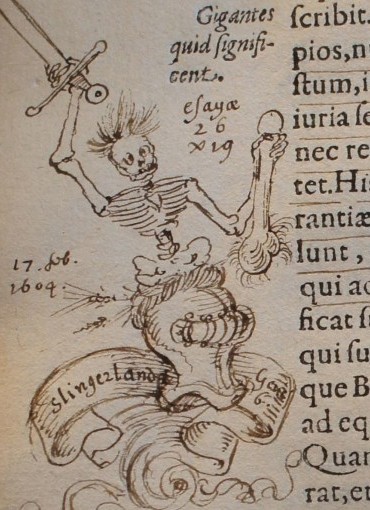
Early Modern Visual Marginalia colloquium

Events;

visualmarginalia1 May 2015, 09:30 – 13:00

Graham Storey Room, Trinity Hall

Colloquium fee: £5 – includes refreshments
Sign-up deadline: Wednesday 29 April 2015

Covenor: Dr Alexander Marr

Speakers:

Professor William Sherman (V&A)
Dr Julian Luxford (St Andrews)
Dr Alexander Marr (Cambridge)
Dr Kate Isard (Visiting Scholar, Cambridge)
Dr Richard Oosterhoff (Cambridge)
Dr Francesco Benelli (Columbia)


A colloquium on early modern visual marginalia organised by Department of History of Art, Trinity Hall, University Library, University of Cambridge.

Sponsored by Department of History of Art; University Library; Centre for Material Texts.

For further information please click here.

Blog;

ellipsisCongratulations to Anne Toner, a member of the CMT steering committee since the Centre’s inception, on the publication of her book on Ellipsis in English Literature. As someone who is fascinated by the workings of punctuation, and who is seriously over-reliant on the ‘…’, I am looking forward to getting my hands on a copy…

the cruellest month

Blog;

A seventeenth-century poetaster accidentally anticipates one of T. S. Eliot’s most famous lines:

april