
Overview
The PhD is an advanced research degree examined by a dissertation of up to 80,000 words, usually after three or more years of research, that should make a 'substantial contribution to knowledge'. Proposals for doctoral research of all kinds are welcome: involving little-known as well as canonical authors, innovative and interdisciplinary perspectives, and more traditional thematic, theoretical, cultural, and literary-historical perspectives. Regular postgraduate training sessions offer guidance at every stage of the process - from first-year assessment to learning to teach to applying for jobs - and an exceptionally rich research culture provides excellent opportunities for meeting other PhDs, MPhils, and Faculty members with shared research interests.
Course in brief
Entry requirements
Masters degree: (min) merit
Supervision
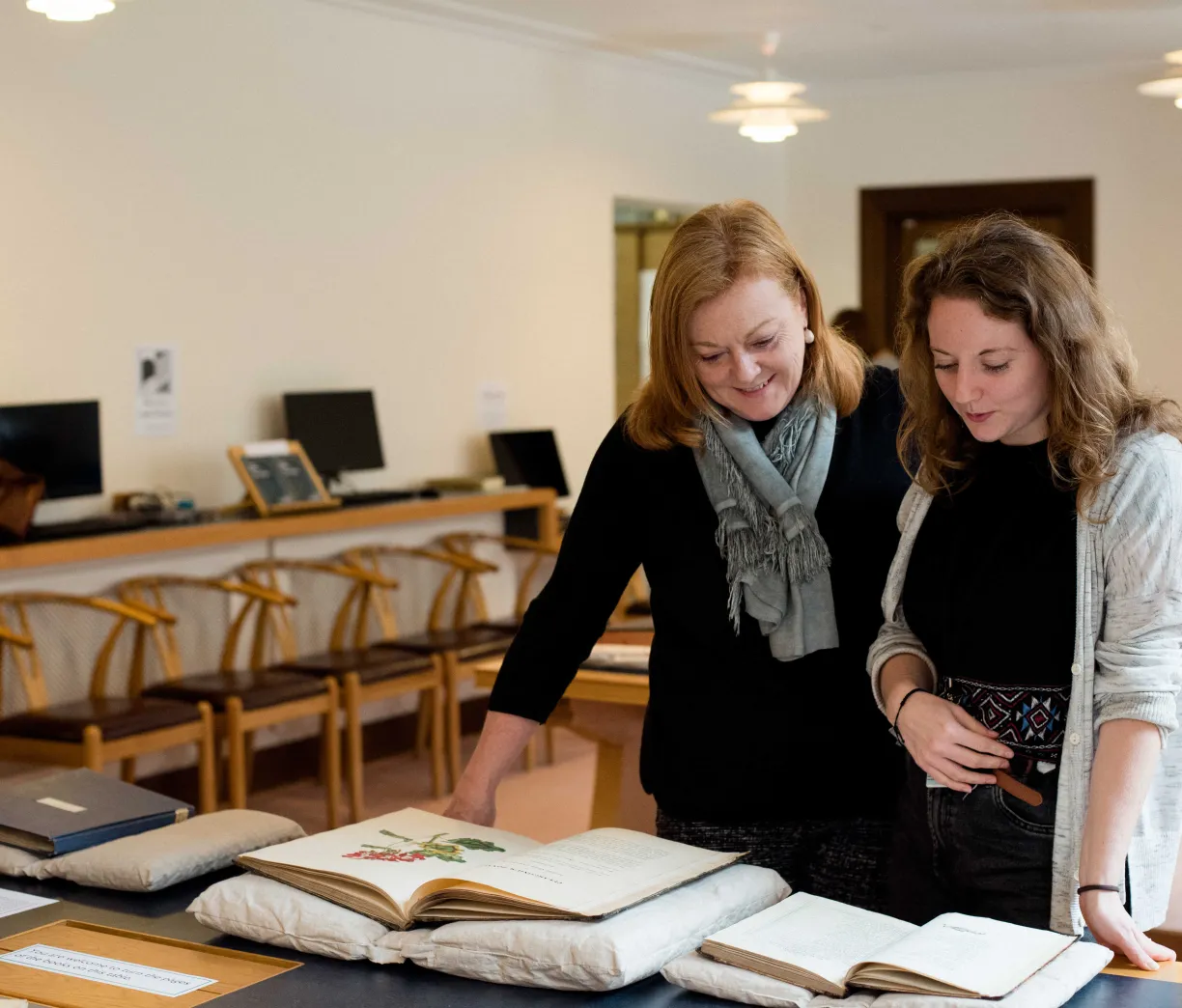
As a PhD student you will work closely with your supervisor who will be assigned after you have been accepted and before you start your studies. The supervisor will be a specialist in the general field in which you propose to work, although they may not be an expert on your particular topic of research. Your supervisor will assist you in refining your research topic, oversee the general direction of your work, and ensure that what you are doing is up to the standard expected for the degree towards which you are working. You can expect to meet your supervisor on average once a month to report on your progress. How much you write in a given period will vary, but as a rule of thumb you will usually be expected to produce at least one substantial piece of written work each term.

Research Community
In addition to the formal training, there are excellent opportunities for the sorts of enriching conversations and collaborations that emerge informally, between fellow PhDs, MPhils, and Faculty members. Regular Research Seminars focus on particular periods and fields which combine internal and invited speakers, and encourage discussions and relationships between the entire research community. The Faculty also puts on conferences on all manner of topics; like the research seminars, many of the most successful and exciting ones are conceived of and run by PhD students.
Degree Structure
The PhD is a time when students spread their intellectual wings. The majority of your time will be taken up with independent research, supported by supervisory and advisory meetings, as well as attending research seminars and conferences in your field of interest.
First Year Registration
Candidates are normally accepted for the PhD on a probationary basis. At the end of their first academic year, it is necessary for candidates to register formally for the PhD.
Supervisions
All PhD students are appointed a supervisor, whom you will meet with approximately ten times per year if you are full-time and a minimum of twice a term if part-time.
Advisory Meetings
PhD students are also assigned an advisor, who will be a member of the Faculty with expertise in your field. You will have a formal meeting with your advisor annually.
How am I assessed?
The PhD is examined by the submission of a dissertation of up to 80,000 words, usually after three or more years of full-time research. Doctoral degrees are awarded to those who have demonstrated all of the criteria below:
- a significant contribution to the field of study;
- submission of work of a quality in whole or in part of a standard to merit publication;
- evidence of the acquisition of knowledge and a detailed understanding of applicable techniques for research and advanced academic enquiry;
- work of a quality and quantity to reflect three years of full-time postgraduate study (or part-time equivalent).
Part-time PhD
Students can take the PhD part-time, studying for either 60% or 75% of the full-time commitment. The majority of the requirements and regulations are the same as for the full-time PhD. As a part-time student you will benefit from the same standard of supervision and access to research facilities as full-time students, and will be integrated into the life of the Faculty and the College you join.
Admissions
The academic criteria for admission and ongoing assessment is the same as for the full-time PhD. The application procedure is largely the same.
Registration
Like full-time students, part-time students are admitted on a probationary basis and must pass a formal registration process in order to progress.
Length of Degree
The total number of terms allowed to complete the PhD depends on whether the part-time student studies 60% or 75% of the full-time commitment.
Fees
As a part-time student, you will pay 60% of the full-time University Composition Fee per year. College fees are charged on the same basis.
Residence Requirements
There are no residence requirements for a part-time PhD but you are expected to have at least two supervisions with your supervisor per term.
Overseas Applications
As a general rule, overseas students who require a visa to study in the UK will not be able to obtain a visa for a part-time degree.